

Direct-to-device (D2D) connectivity has moved from trial to commercial reality, bringing satellite and mobile networks closer together than ever before. Messaging is already expanding into voice, data and IoT, while new partnerships between satellite operators and mobile providers are reshaping the market. The question is no longer whether D2D will scale, but how far it can go — and what spectrum and regulatory frameworks will be needed to support its next phase.
On December 9, 2026, the Americas D2D Policy Forum returns to Washington, D.C. for its second edition. Bringing together leading policy and industry voices from across the US and beyond, this one-day forum will examine the issues shaping the next phase of D2D connectivity.
Hear directly from the regulators, policymakers and companies shaping the market, with first-hand insight into where regulation, spectrum policy and commercial models are heading. The forum will provide a platform for informed discussion and debate on the issues that will define D2D in the coming years, from licensing and spectrum policy to emerging business models and the global regulatory debate ahead of WRC-27. It will also provide an opportunity to connect with senior peers from across the satellite, mobile, technology and policy communities.
This event will take place back to back with the Americas Spectrum Management Conference, taking place on December 7-8.



Forum Global specialises in the organisation of policy-focused conferences on a global level.
Developed in partnership with businesses, institutions, regulators and governments throughout the world, our events provide a platform for stakeholders to engage in topical discussions, strengthen networks and establish new connections.
Since Forum Global’s inception in 2012, we have delivered over one hundred major international conferences across North America, South America, Asia, the Middle East, Africa and Europe.
We are tech policy specialists. We have launched international event initiatives focused on the Internet of Things and 5G, and are the creators of the world’s largest series of global conferences on wireless spectrum management issues – the Global Spectrum Series.




Elveo is the premiere non-terrestrial mobile connectivity company, delivering elevated intelligence for a planet on the move. Elveo offers reliable, next-generation connectivity directly from satellites to smartphones, IoT devices and machines worldwide. Elveo is a globally inclusive company that offers mobile network operators and partners a resilient, always-on next-generation network to connect their customers across enterprise, government and humanitarian sectors.
For more information, visit elveo.com.


GSOA is a non-profit organisation established with the objective of serving and promoting the common interests of satellite operators from Europe, the Middle East, Africa, and the CIS.
The Association today represents the interests of 21 satellite operators who deliver information and communication services across the globe. Together, ESOA members provide invaluable communications services to the whole world, including emergency communications, live broadcasting, maritime and aero communications, secure services for governments, 24-7 monitoring of industrial processes such as energy plants, and a whole range of other communications capabilities that society has come to rely on.


Skylo is a global non-terrestrial network service provider, connecting cellular devices directly over satellite for sensor data, texts, and voice (coming soon). Skylo is built on top of the latest cellular industry (3GPP NTN) standards, making satellite connectivity accessible to all.


SpaceX designs, manufactures and launches the world’s most advanced rockets and spacecraft. The company was founded in 2002 by Elon Musk to revolutionize space transportation, with the ultimate goal of making life multiplanetary.
SpaceX has gained worldwide attention for a series of historic milestones. It is the only private company ever to return a spacecraft from low-Earth orbit, which it first accomplished in December 2010. The company made history again in May 2012 when its Dragon spacecraft attached to the International Space Station, exchanged cargo payloads, and returned safely to Earth — a technically challenging feat previously accomplished only by governments. Since then Dragon has delivered cargo to and from the space station multiple times, providing regular cargo resupply missions for NASA.


As America’s Un-carrier, T-Mobile US, Inc. (NYSE: TMUS) is redefining the way consumers and businesses buy wireless services through leading product and service innovation. The Company’s advanced nationwide 4G LTE network delivers outstanding wireless experiences to approximately 59 million customers who are unwilling to compromise on quality and value. Based in Bellevue, Washington, T-Mobile US provides services through its subsidiaries and operates its flagship brands, T-Mobile and MetroPCS.
As America’s Un-carrier, T-Mobile US, Inc. (NYSE: TMUS) is redefining the way consumers and businesses buy wireless services through leading product and service innovation. The Company’s advanced nationwide 4G LTE network delivers outstanding wireless experiences to approximately 59 million customers who are unwilling to compromise on quality and value. Based in Bellevue, Washington, T-Mobile US provides services through its subsidiaries and operates its flagship brands, T-Mobile and MetroPCS.
Cisco offers an industry-leading portfolio of technology innovations. With networking, security, collaboration, cloud management, and more, they help to securely connect industries and communities.


LLA are a leading communications company with operations in Puerto Rico, the Caribbean and other parts of Latin America and we do things a little differently…
The communications and entertainment services that we offer to our residential and business customers include video, broadband internet, telephony and mobile services. In most of our operating footprint, we offer a “triple-play” of bundled services of digital video, internet and telephony in one subscription. We are also bundling, where available, mobile offerings with the “tripe-play” products to offer a “quad-play”, or fixed-mobile convergence service. Available fixed service offerings depend on the bandwidth capacity of a particular fixed system and whether it has been upgraded for two-way communications.
 Access Partnership
 Access Partnership is the world’s preeminent tech advisory firm. We’ve been helping leading companies navigate complex regulatory challenges and expand their products and services to new markets since 1999. During this time, we’ve also worked closely with governments to offer advice on creating policies and regulations as the landscape continues to change with new and emerging technologies.
Through two decades of experience, Access Partnership has developed effective and proprietary processes that ensure our clients’ goals are achieved every time. With our expertise and experience, we’re able to anticipate future regulations and manage policy trends on a global scale.
Their mission is to ensure that everyone has access to transformative technologies while promoting fair competition and consumer choice.
 Analysys Mason
 Analysys Mason is the world’s leading management consultancy focused on telecoms, media and technology (TMT). They give clarity and confidence in answering our clients’ biggest commercial questions: What strategy will best enhance value? What implementation plan will be most successful? What is the optimal positioning for five years’ time?
Analysys Mason bring together commercial and technical expertise across four interconnected consultancy practices strengthened by globally respected research.
 AST Space Mobile
 The mission at AST SpaceMobile is to develop the foundation for an increasingly interconnected society. Collaborating with cellular providers in the U.S. and around the world will facilitate our goal to improve internet access globally. They employ patented technology to provide seamless connections from almost anywhere.
 DLA Piper
 We believe great businesses can make a better world. Forward-thinking, innovative organizations can find the answers to today’s most difficult questions. That’s why, every day, we help them succeed.
Our bold and dynamic culture means we think big and act decisively. Because relationships are at the heart of everything we do for our clients and communities.
dlapiper.com
 GSMA
GSMA The GSMA represents the interests of mobile operators worldwide, uniting nearly 800 operators with more than 250 companies in the broader mobile ecosystem, including handset and device makers, software companies, equipment providers and Internet companies, as well as organisations in adjacent industry sectors. The GSMA also produces industry-leading events such as Mobile World Congress, Mobile World Congress Shanghai and the Mobile 360 Series conferences.
 GSOA
GSOA GSOA is a non-profit organisation established with the objective of serving and promoting the common interests of satellite operators from Europe, the Middle East, Africa, and the CIS.
The Association today represents the interests of 21 satellite operators who deliver information and communication services across the globe. Together, ESOA members provide invaluable communications services to the whole world, including emergency communications, live broadcasting, maritime and aero communications, secure services for governments, 24-7 monitoring of industrial processes such as energy plants, and a whole range of other communications capabilities that society has come to rely on.
 Hispasat
 HISPASAT, Red Eléctrica Group’s satellite services operator and provider, offers satellite broadband and connectivity solutions including Internet access, mobility and the expansion of cellular networks, as well as other added-value proposals, to governments, corporations and telecommunications operators in the Americas, Europe and North Africa. It is also a leader in distributing Spanish and Portuguese audio-visual content and broadcasting important digital platforms such as Direct To Home (DTH) television and High Definition Television (HDTV), in addition to managing transportation and audio-visual signals from HISPASAT Peru’s teleport in Lurín. HISPASAT, which is comprised of companies that have a presence in Spain as well as in Latin America, where its Brazilian affiliate HISPAMAR is based, is one of the world’s largest companies in its sector in terms of revenue, and the main communications bridge between Europe and the Americas.
https://www.hispasat.com
 Intelsat
 Intelsat S.A. (NYSE: I) operates the world’s first Globalized Network, delivering high-quality, cost-effective video and broadband services anywhere in the world. Intelsat’s Globalized Network combines the world’s largest satellite backbone with terrestrial infrastructure, managed services and an open, interoperable architecture to enable customers to drive revenue and reach through a new generation of network services. Thousands of organizations serving billions of people worldwide rely on Intelsat to provide ubiquitous broadband connectivity, multi-format video broadcasting, secure satellite communications and seamless mobility services. The end result is an entirely new world, one that allows us to envision the impossible, connect without boundaries and transform the ways in which we live. For more information, visit www.intelsat.com.
 Lynk Global
 Lynk’s mission is to connect everyone, everywhere. To achieve this mission, Lynk builds, launches, and operates ‘cell-tower-in-space’ satellites that provide direct-to-device connectivity with continuous global coverage. Lynk is a patented, proven, and commercially licensed direct-to-device system that delivers service through its mobile network operator (MNO) partners. Lynk has proven two-way commercial and emergency messaging on all seven continents, and is scaling to provide service at broadband speeds.
 NewSky.plus
 At NewSky.plus, they thrive in the realms of satellites, SatComs, and commercial space. This is their comfort zone, where we innovate and lead. They take on projects of critical importance for both private companies and public sector entities, ensuring regulatory affairs and policy affairs are managed strategically.
NewSky.plus expertly guide you through compliance and go-to-market strategies, crafting and advocating for effective regulations outside the US. Their deep expertise ensures that commercial goals and senior government relations in the Global South are met with precision.
Their vision and challenges are our input. Achieving your objectives is their priority output. They do this by focusing on strategic thinking, risk management and creative implementation. They provide ideas you can trust.
NewSky.plus’s philosophy is simple: passion, service, effectiveness, and know-how. They never compromise on quality and tailor unique strategies for each client.
 Sateliot
 Sateliot is launching the first LEO satellite constellation based on the 5G standard, allowing commercial, unmodified cellular IoT devices to connect from space. This is the first time in history that cellular terrestrial telecom is merging seamlessly with satellite connectivity, and Sateliot is leading this revolution. Sateliot’s cost-effective technology and the possibility to use commercial low-cost devices to connect to satellite opens infinite possibilities on the untapped market of massive IoT in remote areas, and it is in line with Sateliot’s mission to make IoT connectivity available everywhere and to everybody.
www.sateliot.space
 SES
SES SES is the world-leading satellite operator and the first to deliver a differentiated and scalable GEO-MEO offering worldwide, with more than 50 satellites in Geostationary Earth Orbit (GEO) and 16 in Medium Earth Orbit (MEO). SES focuses on value-added, end-to-end solutions in two key business units: SES Video and SES Networks. The company provides satellite communications services to broadcasters, content and internet service providers, mobile and fixed network operators, governments and institutions. SES’s portfolio includes SES Americom, one of the earliest operators of commercial GEO satellites, SES Government Solutions, which is exclusively focused on the needs of the U.S. Government, as well as GovSat, a 50/50 public-private partnership between SES and the Luxembourg government. SES also owns the ASTRA satellite system, which has the largest DTH television reach in Europe, MX1, a leading media service provider offering a full suite of innovative services for both linear and digital distribution, and O3b, the only non-geostationary system delivering fibre-like broadband services.
https://www.ses.com/
Skylo Skylo is a global non-terrestrial network service provider, connecting cellular devices directly over satellite for sensor data, texts, and voice (coming soon). Skylo is built on top of the latest cellular industry (3GPP NTN) standards, making satellite connectivity accessible to all.
 Viasat
 Viasat is a global communications company that believes everyone and everything in the world can be connected. With offices in 24 countries around the world, our mission shapes how consumers, businesses, governments and militaries around the world communicate and connect. Viasat is developing the ultimate global communications network to power high-quality, reliable, secure, affordable, fast connections to positively impact people’s lives anywhere they are—on the ground, in the air or at sea, while building a sustainable future in space. In May 2023, Viasat completed its acquisition of Inmarsat, combining the teams, technologies and resources of the two companies to create a new global communications partner. Learn more at www.viasat.com, the Viasat News Room or follow us on LinkedIn, X, Instagram, Facebook, Bluesky, Threads, and YouTube.
 Vodafone
 Vodafone is a leading telecommunications company in Europe and Africa, led by its purpose to connect for a better future.
Vodafone develops a range of leading products and services to connect their customers and help build the digital societies of the future.
 Adam Cassady, Principal Deputy Assistant Secretary and Deputy Administrator, National Telecommunications and Information Administration (NTIA)
 Adam Cassady was appointed as the Principal Deputy Assistant Secretary and Deputy Administrator of the National Telecommunications and Information Administration (NTIA) on March 16, 2025. In this capacity, he provides advice and assistance to the Assistant Secretary for Communications and Information in the formulation, development, and implementation of telecommunications and information policies of the Executive Branch.
Prior to his appointment at NTIA, Mr. Cassady served for over four years at the Federal Communications Commission (FCC) for Commissioner Nathan Simington. Most recently, Mr. Cassady served as Chief of Staff to Commissioner Simington, and prior to that as Commissioner Simington’s Senior Legal Advisor, managing a variety of telecommunications and technology portfolios.
Prior to joining the FCC, Cassady co-founded a technology firm focused on delivering enterprise machine learning solutions. He holds a law degree from the University of Chicago Law School and a bachelor’s degree from The Ohio State University.
Principal Deputy Assistant Secretary and Deputy Administrator
National Telecommunications and Information Administration (NTIA)
 Jay Schwarz, Chief, Space Bureau, Federal Communications Commission (FCC)
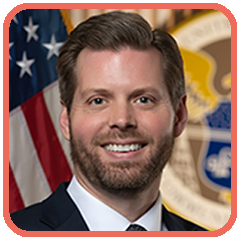
 Jay Schwarz is Chief of the FCC Space Bureau. Previously, he served as Vice President of Public Policy for Comcast, focusing on broadband issues. In his first tour at the FCC he was Wireline Advisor to former Chairman Ajit Pai and held positions within the Wireline Competition Bureau, Wireless Telecommunications Bureau, and the Office of Strategic Planning. Jay holds a Ph.D. in Economics from the University of Pittsburgh and an undergraduate degree in Civil Engineering from Texas A&M University.
Chief, Space Bureau
Federal Communications Commission (FCC)
 Carlos Manuel Baigorri, President, National Telecommunications Agency of Brazil (ANATEL)
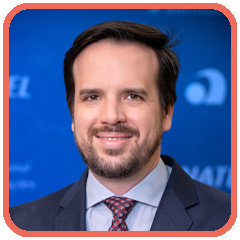
 Anatel’s President Carlos Baigorri has a degree in Economic Sciences from the
University of Brasília (UnB), with a Master’s and Doctorate in Economics from the
Catholic University of Brasília (UCB). Acting in the telecommunications area since 2006,
he was a consultant and analyst of sector information in an Association of mobile
operators. He has also served as an undergraduate professor at the Catholic University
of Brasilia (UCB), at the Institute of Higher Education of Brasília (IESB), and at the
Brazilian Institute of Capital Markets (IBMEC). He wrote articles and book chapters
published in Brazil and abroad. He has been a career permanent employee at Anatel
since 2009, where he has been previously nominated Executive Superintendent,
Competition Superintendent, Obligations Control Superintendent and Head of
Technical Advisory.
President
National Telecommunications Agency of Brazil (ANATEL)
 David Goldman, Vice President, Satellite Policy, SpaceX
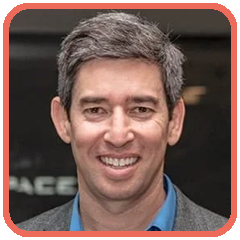
 David Goldman is the Vice President of Satellite Policy for SpaceX. Prior to joining SpaceX in 2018, he was the Chief Counsel for the Communication and Technology Subcommittee since January 2015. Before that, he served as the Senior Legal Advisor for FCC then-Commissioner Jessica Rosenworcel. He was the Commissioner’s chief advisor on wireless, international, and public safety issues, along with responsibility for other issues of policy, strategy, public relations, and office operations.
David joined Commissioner Rosenworcel’s office from the United States Senate Committee on Commerce, Science, and Transportation, where he served on detail as Counsel to the Subcommittee on Communications, Technology, and the Internet.
Prior to serving on Capitol Hill, David served in several positions at the FCC, including in the office of Chairman Genachowski and as a Policy Advisor to the Chief of the Wireless Telecommunications Bureau. He joined the agency as an Honors Attorney, serving as Attorney Advisor in the Spectrum Competition and Policy Division of the Wireless Telecommunications Bureau. Before this, he served as Staff Law Clerk at the United States Court of Appeals for the Seventh Circuit in Chicago. He also worked as an associate at the law firm Hughes Hubbard & Reed in New York.
David received his law degree from the University of Pennsylvania and his undergraduate degree from the University of Florida.
Vice President, Satellite Policy
SpaceX
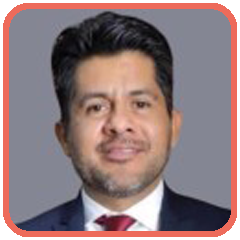 Adán Salazar Garibay, Commissioner, Telecommunications Regulatory Commission of Mexico (CRT)
 Bio to follow.
Commissioner
Telecommunications Regulatory Commission of Mexico (CRT)
 David Willis, Group Director, Spectrum, Ofcom UK
 David has spent 35 years of working in the telecom industry working in a variety of executive and technical leadership positions across the public and private sectors. Most recently as Group Director Spectrum at Ofcom, President of the Communications Research Centre (Canada), and Senior Director for Spectrum Engineering at Innovation Science and Economic Development (Canada). Prior to that David held significant product leadership roles in BlackBerry’s handset business and Nortel’s Optical and Network Management business units.
Group Director, Spectrum
Ofcom UK
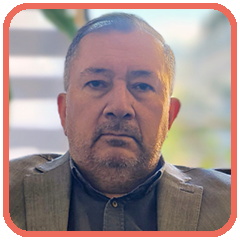 Manuel González Farfán, Telecommunications Analyst, Subtel Chile
 Manuel González Farfán has worked for over 25 years at the Chilean Undersecretariat of Telecommunications (Subtel), participating as a delegate in meetings of CITEL, CCPII, ITU (WRC), and others. Manuel currently works in the Spectrum Management Department at SUBTEL, focusing on sector regulation and standards, particularly for wireless services. He also represents the Ministry of Transport and Telecommunications on the Chilean Space Executive Committee.
Telecommunications Analyst
Undersecretariat of Telecommunications of Chile (Subtel)
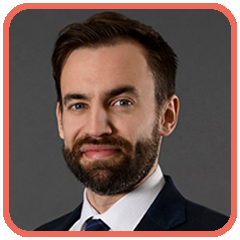 Michal Kasprowicz, Partner, DLA Piper
 Mike’s practice focuses on high-tech intellectual property and telecommunications regulatory laws.
Building on his background in electrical and communications engineering, Mike has helped clients navigate Canada’s evolving telecommunications regulatory framework. Mike has provided guidance on spectrum availability and licensing for terrestrial and satellite systems, including for private 5G, remote sensing, fixed satellite and mobile satellite systems; equipment certifications for radios and interference causing equipment; service licensing and registrations for facilities and non-facilities based telecommunications, internet and VoIP service providers; and, privacy and data security.
Mike has also represented clients at all stages of intellectual property litigation, from pre-litigation opinions and originating pleadings, through motions and discoveries, and to appearances at mediations, trials and appeals. Mike is also a registered patent and trademark agent and has taught intellectual property courses at the University of Windsor as a sessional instructor.
Partner
DLA Piper
 Kirk Sookram, Deputy Chief Executive Officer, Telecommunications Authority of Trinidad and Tobago
 Kirk Sookram holds the position of Deputy Chief Executive Officer at the Telecommunications Authority of Trinidad and Tobago (the Authority). He has been employed with the Authority since its inception in July 2004, starting as a Telecommunications Engineer, laying the foundation for the spectrum management mandate of the regulator and working his way up the corporate ladder to Executive Director Technology and Engineering and, in 2020, to the position he currently holds.
During his tenure at the Authority, he has specialized in the areas of spectrum management, wireless technologies, telecommunications regulation, ICT and broadband development, cost modeling, universal service initiatives and policy development.
Kirk is a national of the Republic of Trinidad and Tobago. His qualifications include a Bachelors of Science Degree (with Honours) in Electrical & Computer Engineering from the University of the West Indies and a Masters of Science Degree (Distinction) in Operational Telecommunications from Coventry University, United Kingdom.
Kirk has represented the Authority over the years at conferences and seminars and participated in panel discussions on telecommunications regulation, broadband development and emerging wireless technologies.
Kirk also held the position of the Chairman of the Caribbean Spectrum Management Task Force established by the Caribbean Telecommunications Union (CTU) during the period 2016 – 2020, during which time he led the CTU preparatory work for the ITU World Radiocommunication Conference, 2019. He also held the position of Chairman of the Caribbean Spectrum Management Steering Committee of the CTU for the period 2020 – 2024.
Kirk also currently serves as Vice Chair of the ITU-T, Regional Group of the Americas for Study Group 2 – Operational aspects of telecommunications and ICTs.
Deputy Chief Executive Officer
Telecommunications Authority of Trinidad and Tobago
 Tarun Gupta, Chief Product Officer and Co-Founder, Skylo
 Tarun Gupta is CPO and co-founder of Skylo Technologies. Having more than 20 years of experience, Tarun held executive positions at Google, Parallel Infrastructure, FiberTower, and currently advises leading companies regarding market fit, product enhancements, and overall strategic direction.
Chief Product Officer and Co-Founder
Skylo
 Isabelle Mauro, Director General, GSOA
 Isabelle Mauro is Director General of GSOA that represents the interests of 70 members in the satellite ecosystem. She reports directly to their Chief Executives.
Under Isabelle’s leadership, GSOA and its member CEOs lead the effort to showcase the benefits of satellite communications for a more inclusive and secure society – vital to bridging the world’s digital divide, achieving the UN’s Sustainable Development Goals and realizing the 5G ecosystem.
Isabelle has 25 years experience in the Telecoms and Technology sector, starting at the GSMA, where she was responsible for government and international Affairs. In 2015 she moved to New York to join the World Economic Forum as Head of Information, Communications and Technology Industries, managing the portfolio for 60+ Tech companies globally and leading initiatives on inclusive and sustainable digital transformation.
Isabelle is passionate about inclusion and sustainability. She is Chair of the High-Level Advisory Board of the DigitalGoesGreen Foundation. She also sits on the Advisory Board of Women in Tech and is a member of the UNESCO Advisory Group for the Declaration on Connectivity for Education.
Isabelle holds an MSc in European Politics and Policy from the London School of Economics. She is fluent in French, English, Italian and Spanish.
Director General
GSOA
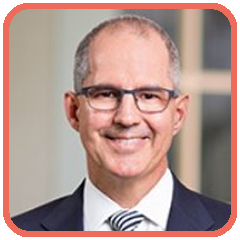 Scott Patrick, Executive Director, Office of Spectrum Management, NTIA
 Scott Patrick helps direct NTIA’s work on national spectrum strategies and policies. His responsibilities include overseeing the development of spectrum-sharing and repurposing strategies in the agency’s work to address federal and commercial spectrum use and demand.
Before joining NTIA, Mr. Patrick was a wireless, media, and technology attorney in private practice, counseling telecom, cable, broadcast, and broadband companies on a wide range of policy, transactional, and regulatory matters. He also has served as an attorney in the Wireless Telecommunications Bureau at the FCC. Early in his career, Mr. Patrick was a research engineer at the U.S. Naval Research Laboratory where he helped deploy the first three-axis fiberoptic electromagnetic sensors. He is a graduate of the University of Virginia School of Law and holds a master’s degree in electrical engineering and physics from the University of Maryland.
Executive Director, Office of Spectrum Management
National Telecommunications and Information Administration (NTIA)
 Tom Stroup, President, Satellite Industry Association (SIA)
 As President of SIA, Tom is the trade association’s lead advocate for regulatory and policy issues of critical importance to SIA’s membership, including spectrum and licensing issues, defense and public safety matters, and export control and international trade issues. He also manages the day-to-day operations of SIA, including member communications, staff leadership and organization of SIA sponsored events. Tom became the president of SIA in December of 2014.
Prior to joining SIA, Tom was with Shared Spectrum Company (SSC), a leading developer of spectrum intelligence technologies, where he served as CEO. For more than a decade, he served as the President of the Personal Communications Industry Association (PCIA). Previous to his position at SSC, he founded and ran several companies in the technology industry, including Columbia Spectrum Management, P-Com Network Services, CSM Wireless, and SquareLoop.
Tom holds a BS, summa cum laude, in Public Administration from the University of North Dakota. He is also a graduate of Georgetown University Law Center where he served as Editor of the Georgetown Law Journal.
President
Satellite Industry Association (SIA)
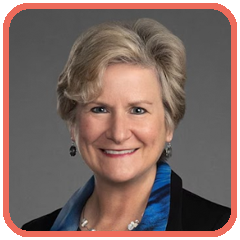 Julie Kearney, Partner and Co-Chair, Space Exploration and Innovation Practice, DLA Piper
 Julie Kearney is a Co-Chair of the Space Exploration and Innovation Practice and a partner in the Telecom group at DLA Piper. She is a globally recognized and dynamic lawyer in the technology, satellite, space, and telecommunications field. For more than 25 years, Julie has worked with governments, industries, and the public sector around the world to promote legal and regulatory frameworks and policies that enable life-changing technologies.
As the first Chief of the Space Bureau at the Federal Communications Commission (FCC), Julie represented and spoke for the Chairwoman and Commissioners on satellite and space-based communication matters and represented the Commission at the domestic and international level. Under Julie’s leadership, the FCC unanimously adopted several regulatory frameworks and launched initiatives to successfully advance industry leadership in the New Space Age. Additionally, during her tenure as Chief, the FCC adopted a regulatory structure for Supplemental Coverage from Space, which made the FCC the first regulator in the world to issue a framework for connecting satellites directly to consumer handsets using spectrum previously allocated only to terrestrial service.
Before joining the FCC, Julie served as the Vice President of Communications Regulatory Affairs and Policy at Twilio Inc., a publicly traded Communications Platform as a Service (CPaaS) provider, where she developed and implemented the company’s global telecommunications regulatory and policy and law enforcement response strategy. She also served as the Global Head of Communications Regulation and Policy for Loon, an Alphabet Inc. company, where she led international and US regulatory initiatives to bring internet access to unserved and underserved communities around the world via a network of balloons on the edge of space. She also held roles at the Consumer Technology Association, National Public Radio, MCI, and private legal practice.
Julie is a past president of the Federal Communications Bar Association (FCBA – The Tech Bar) and she also served as chair of the FCBA Foundation. She was a long-serving member of the Federal Communications Commission’s Consumer Advisory Committee and also served on its Broadband Deployment Advisory Committee. Other Board positions include USTelecom and the United States Technical Training Institute (USTTI).
Julie earned her B.A. from Mount Holyoke College and a J.D. from Catholic University’s Columbus School of Law, with a certificate from its Law and Technology Institute. She recently completed a 3.5 year term on the Columbus School of Law’s Board of Visitors. A trained singer, she has sung with choruses in the San Francisco Bay Area and Washington, DC area, most recently with Schola Cantorum (CA) and the Choral Arts Society of Washington (DC).
Partner and Co-Chair, Space Exploration and Innovation Practice
DLA Piper
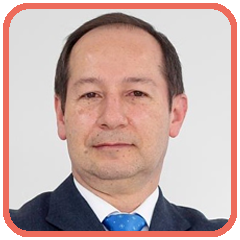 Sergio Sotomayor Rodríguez, Director General, National Spectrum Agency of Colombia (ANE)
 Bio to follow.
Director General
National Spectrum Agency of Colombia (ANE)
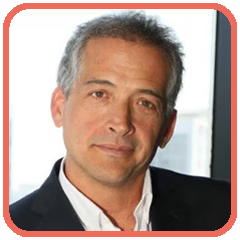 Alfie Ulloa, Executive President, Chile Telcos
 Bio to follow.
Executive President
Chile Telcos
 Pascale Dumit, Director, International Spectrum Policy, T-Mobile
 Pascale Dumit is Director for International Spectrum Policy at T-Mobile. She leads the company’s engagements at the International Telecommunication Union (ITU) and within other regional organizations such as the Inter-American Telecommunication Commission (CITEL).
Pascale has served on U.S. delegations to the ITU since 2010, including the U.S. delegations to the 2022 Plenipotentiary Conference and the 2023 World Radiocommunication Conference.
Pascale is also a member of the FCC 2027 ITU World Radiocommunication Conference Advisory Committee, a member of the Department of State International Digital Economy and Telecommunication Advisory Committee, a Co-Chair of the Federal Communications Bar Association (FCBA) International Telecommunications Committee and a Vice-Chair of the U.S. ITU Association.
Pascale’s previous experience includes various roles in the Space industry in addition to supporting NASA and the U.S. Department of Defense on a broad range of international spectrum management issues where she served as a key contributor to the overall development and implementation of U.S. strategy in national and international spectrum regulatory environments.
Pascale holds BS and MS degrees in Electrical Engineering from The George Washington University.
Director, International Spectrum Policy
T-Mobile
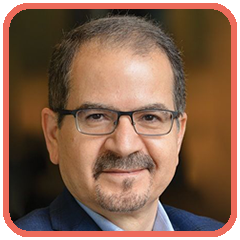 Mohammad Marashi, SVP, Future Business & Innovation, SES
 Mohammad was appointed SVP, Future Business & Innovation in June 2024 and is spearheading innovation and exploring new business opportunities.
Before that Mohammad oversaw Product & Strategy across multiple network segments including Aero, Maritime, Fixed Data, Government and Cloud, with a particular focus on SES-17 Very High Throughput Satellite (VHTS) and SES’s second generation of MEO satellites, O3b mPOWER.
Prior to joining SES in 2020, Mohammad held numerous executive roles at Intelsat in Product Strategy, Product Development, and Innovation. Amongst the key achievements was the development of advanced space segment offerings using onboard processing technology on High Throughput Satellites (HTS) and Software Defined Satellites (SDS).
Mohammad holds both a BS & MS in Electrical Engineering from Boston University and an MBA from Columbia.
SVP, Future Business & Innovation
SES
 Amy Mehlman, Executive Vice-President & Chief Global Affairs Officer, Lynk Global
 Amy Mehlman is EVP and Chief Global Affairs officer at Lynk Global. She is a senior telecommunication professional with nearly three decades hands-on experience helping innovative companies secure establish favorable public policies and secure market access by working with government policymakers, industry partners, and multilateral NGOs.
Most recently, Mehlman worked as VP for Global Affairs and Stakeholder Relations at E-Space Inc. where she led global policy efforts shaping the rapidly growing non-geostationary satellite market, successfully-pursued government contracts, obtained market access, spearheaded partnerships, and oversaw legislative efforts. Prior to that Amy served as VP of U.S. Government Affairs and Global Policy at Viasat, leading their domestic and international policy efforts on satellite licensing, space safety and equitable access to spectrum. Earlier in her career, Amy was Founder and President of a successful boutique telecommunications public policy firm (Mehlman Capitol Strategies) representing over 30 companies before the U.S. Congress, FCC & Executive Branch. Amy began her career at the prestigious Washington, D.C. law firm Wiley, Rein & Fielding where she represented leading wireless, satellite, telecom equipment and broadcast companies before the US Congress and Administration.
Executive Vice-President & Chief Global Affairs Officer
Lynk Global
 L. Barbee Ponder, General Counsel & Vice President of Regulatory Affairs, Globalstar
 Barbee has served as General Counsel and Vice President of Regulatory Affairs for Globalstar since July 2010. In this role he has directed Globalstar’s regulatory and licensing activities around the world.
Barbee has led the international regulatory effort required for the commercial introduction of the world’s first satellite direct-to-device service, now providing mobile satellite connectivity to millions of people globally. This effort included the expansion and licensing of Globalstar’s ground network now consisting of 28 gateway Earth stations in 18 countries.
Most recently, Barbee worked to secure the U.S. Federal Communications Commission’s reauthorization of Globalstar’s senior HIBLEO-4 constellation filing for an additional 15-year license term.
He holds a law degree from Emory University School of Law in Atlanta, Georgia and a Bachelor of Science in Management degree from Tulane University’s A.B. Freeman School of Business in New Orleans, Louisiana
General Counsel & Vice President of Regulatory Affairs
Globalstar
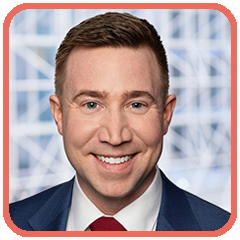 J. Ryan Thompson, Senior Associate, Global Regulatory, Hogan Lovells
 Ryan Thompson is a trusted advisor to leading technology and telecommunications firms, offering practical solutions to complex regulatory and policy challenges. His practice spans an array of cutting-edge policy and legal issues before lawmakers, the courts, and key agencies such as the Federal Communications Commission, National Telecommunications and Information Administration, Federal Trade Commission, and U.S. Department of Justice. Ryan’s clients include wireless carriers, prominent tech firms, satellite operators, trade associations, and startups. Ryan’s expertise covers many critical issues in the tech and telecom sector, including wireless and satellite spectrum policy and licensing, AI regulation and legislation, online platform governance and regulation, foreign ownership and merger reviews, and experimental licensing.
Senior Associate, Global Regulatory
Hogan Lovells
 Johanne Lemay, Co-President, Lemay-Yates Associates (LYA)
 Ms. Lemay has more than 30 years of experience in the industry and is a recognized expert in telecommunications and broadcasting. Her expertise covers development of business plans, valuation, due diligence, spectrum matters and market research. Ms. Lemay has supported clients in the US, Europe, North Africa, Latin America and Canada.
Ms. Lemay is the lead consultant for Private Auctions conducted by LYA for clients disposing of spectrum licenses and other assets.
Ms. Lemay is actively involved in consultations for the development of public policy. She has acted as an Expert Witness in regulatory proceedings and litigations. Recent expert evidence mandates were focused on broadband subsidies in rural and remote areas, wireless siting, mid-band 5G spectrum, national roaming, television and over-the-top services, benchmarking investment in broadband and the regulatory framework for MVNOs.
She has supported clients in successfully acquiring subsidy funds for broadband deployment in rural areas.
She is co-leader of the development of the LYA Auction Platforms that support Combinatorial Clock Auctions (CCA), Simultaneous Multiple Round Ascending (SMRA) Auctions, Sealed Bid Auctions as well as Clock Auctions.
Prior to co-founding LYA, Ms. Lemay held a number of positions in marketing and product management with Nortel Networks. Ms. Lemay holds an Engineering Physics degree from Laval University and an MBA, Executive Option, from Concordia University in Montreal.
Co-President
Lemay-Yates Associates (LYA)
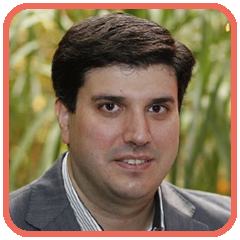 Luis Ottati, Director of Engineering, National Communications and Media Regulator of Argentina (ENACOM)
 Luis Ottati is a senior telecommunications executive with over 25 years of experience in regulatory leadership, spectrum management, and mobile technology strategy across Latin America. As Chief of Engineering at ENACOM Argentina, he leads national efforts in radio spectrum planning and ICT services plus telecommunication equipment homologation.
His contributions include strategic national resolutions on spectrum use, including initiatives for rural connectivity, unlicensed spectrum, spectrum for private networks and strategic band allocations for 5G and satellite services deployment. He is a strong advocate for innovation, digital inclusion, and state sovereignty over strategic resources like spectrum.
He is an Electronics Engineer from ITBA (Buenos Aires Institute of Technology). Throughout his career, he has held pivotal roles in both public and private sectors —Microsoft, Nokia and Telecom Personal— driving regional technology roadmaps, product launches, mobile services and technology integrations plus customer care.
Director of Engineering
National Communications and Media Regulator of Argentina (ENACOM)
 Mindel de la Torre, Head of Global Regulatory Affairs, Skylo Technologies
 Bio to follow.
Head of Global Regulatory Affairs
Skylo Technologies
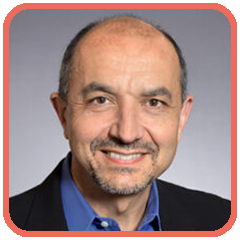 George Giagtzoglou, Vice President Strategy & Marketing, Omnispace
 George Giagtzoglou is the Vice President of Strategy & Marketing at Omnispace, responsible for overseeing corporate strategy and marketing, as well as supporting strategic partner development and financing initiatives for the company that is redefining mobile communications.
George brings more than 35 years of diverse technical and business experience to Omnispace, leading initiatives that have shaped the commercial satellite industry, and represent more than $28Bn in corporate development deals. Prior to Omnispace, George was the President of Alazo Consulting. In this role he delivered expert satellite industry insights to support strategic investments and acquisitions.
Previously, George was the head of Corporate Development at ABS Global with responsibilities including corporate development, corporate & regional strategy, business planning, market intelligence, satellite business case development and financing.
Prior to ABS he was with Intelsat for 11 years as the head of Corporate Strategy & Planning and also led Corporate Development, Global Marketing, Product Strategy & Development, and Business Development. Mr. George’s was instrumental in various company sale processes in 2005 and 2008, and the acquisition of PanAmSat in 2006. He played a key role in developing and commercializing the company’s capabilities, primarily in the area of broadband services.
Prior to joining Intelsat in 2000, George’s career in the space and telecommunications industry included engagement leadership positions in the telecommunications practice of A.T. Kearney Management Consultants, and senior engineering and business management positions at Telstra (Australia).
George has a master’s degree from The Wharton School of the University of Pennsylvania, in addition to a bachelor’s degree in Electrical & Electronic Engineering from the University of Adelaide in South Australia.
Vice President Strategy & Marketing
Omnispace
 Michele C. Farquhar, Partner, Global Regulatory, Hogan Lovells
 Years of government, industry, and law firm service have shaped Michele Farquhar into an influential advisor, advocate, and thought leader for the technology, media, and telecoms industry. She helps clients with a range of global and U.S. communications policy initiatives, spectrum auctions, licensing and compliance matters, and regulatory strategy involving M&A transactions as well as litigation.
Michele obtains regulatory approvals, waivers, and other licenses for many new and cutting-edge technologies. And she leads teams advising major global companies on regulatory strategy issues involving a range of international jurisdictions. As a legal authority in her industry, she also speaks and writes extensively on a range of communications issues.
Michele joined the firm in 1997, after serving as Chief of the Federal Communications Commission (FCC) Wireless Telecommunications Bureau. While at the FCC, she led the agency’s new spectrum auction initiative and held primary responsibility over several major auctions and spectrum policy initiatives, as well as the bureau’s implementation of the Telecommunications Act of 1996.
Previously, Michele served as Acting Deputy Assistant Secretary and Chief of Staff for the National Telecommunications and Information Administration at the U.S. Department of Commerce. She played a lead role in developing the administration’s positions on telecommunications reform as well as spectrum, international, electronic commerce, and other policy issues.
As Vice President for Law and Regulatory Policy at the Cellular Telecommunications Industry Association, she gained industry knowledge and regulatory advocacy experience while representing cellular carriers on regulatory, policy, and legal issues before the FCC. Michele also served as senior legal advisor to FCC Commissioner Ervin Duggan and as the mass media advisor to two FCC general counsels.
Partner, Global Regulatory
Hogan Lovells
 Ari Q. Fitzgerald, Partner, Global Regulatory, Hogan Lovells
 Ari Fitzgerald leads the firm’s Communications, Internet, and Media practice. He provides strategic, legal, and policy advice on a wide range of communications and spectrum policy issues to some of the world’s largest and most dynamic communications network operators and equipment manufacturers, as well as industry trade associations and investors.
Ari enjoys helping automobile manufacturers and suppliers, medical device manufacturers, drone manufacturers, and other technology companies bring new and innovative communications-related products and services to market. In recognition of his path-breaking contributions to the wireless industry, he is one of only three attorneys to have ever been inducted into the Wireless History Foundation’s Wireless Hall of Fame.
Partner, Global Regulatory
Hogan Lovells

Find out more about the European edition of The D2D Policy Forum at the event website, d2dpolicy.eu
Note: All timings are in Central European Summer Time (CEST).
The full conference agenda will be available soon, offering an in-depth overview of all sessions, speakers, and activities. Stay tuned for exciting updates!
All times are in Washington, D.C. (EDT)
Direct-to-device connectivity in the United States has moved from trial to commercial deployment, and the market is reorganising around it. Satellite networks are extending terrestrial coverage for messaging, voice, data and IoT; a wave of spectrum consolidation has reshaped who is positioned to deliver those services; and mobile operators in the US and elsewhere are testing new partnerships and business models to capture the opportunity. What was framed two years ago as a supplement to terrestrial coverage increasingly looks like a layer of the network in its own right. This session will assess what that shift means for regulation. Panellists will consider whether the supplemental coverage framing still fits the services now being launched, what recent spectrum transactions and operator partnerships mean for market structure and new entry, and which obligations should attach to D2D as it becomes more capable. It will then turn to the framework itself: whether D2D needs a settled regulatory home of its own rather than continuing to be accommodated within regimes designed for satellite and terrestrial services separately, how far licensing reform and legislative proposals can go towards providing it, and what degree of regulatory certainty the sector needs to justify investment at national scale.
The FCC’s SCS framework was a world first in opening the door to satellite use of terrestrial mobile spectrum, and the IMT and MSS deployment models that this forum compared a year ago are now both operating at commercial scale in the US market. The next phase will place considerably greater demands on spectrum. Operators are seeking additional capacity across both mobile and MSS bands; incumbents are defending existing allocations, backed by the FCC’s April decision on the Big LEO bands; and the FCC is weighing how much further satellite access should extend. This session will examine where policymakers should look next, and at what cost. Panellists will assess whether SCS remains fit for purpose, how much additional spectrum D2D can realistically justify and where it would come from, and whether the sector ultimately needs an allocation of its own rather than continuing to borrow. The session will also revisit a question this Forum first asked in 2025 and which remains unresolved – whether a dedicated D2D band is viable – and consider what position the US should take into WRC-27.
In August 2026, the FCC opened a proceeding to explore whether devices operating under its Part 15 unlicensed rules (including Wi-Fi, Bluetooth and IoT equipment) could be used for direct communications with satellites, potentially opening more than 200 MHz across the 2.4 GHz and 5.8 GHz bands to D2D applications. The proposals could bring satellite connectivity into a much broader ecosystem of existing devices, potentially enabling new models and closer integration between satellite and the vast terrestrial unlicensed ecosystem. But extending a framework designed principally for terrestrial, short-range communications into the space environment raises fundamental questions around power levels, link budgets, interference, equipment authorisation and incumbent protection. This session will examine the FCC’s proposals and consider what a satellite-enabled unlicensed ecosystem could look like in practice. Panellists will assess the technical challenges it would present, whether unlicensed spectrum could become a meaningful new pillar of satellite connectivity alongside licensed models, and whether the US approach could provide a template for other markets.
Direct-to-device connectivity in the United States has moved from trial to commercial deployment, and the market is reorganising around it. Satellite networks are extending terrestrial coverage for messaging, voice, data and IoT; a wave of spectrum consolidation has reshaped who is positioned to deliver those services; and mobile operators in the US and elsewhere are testing new partnerships and business models to capture the opportunity. What was framed two years ago as a supplement to terrestrial coverage increasingly looks like a layer of the network in its own right. This session will assess what that shift means for regulation. Panellists will consider whether the supplemental coverage framing still fits the services now being launched, what recent spectrum transactions and operator partnerships mean for market structure and new entry, and which obligations should attach to D2D as it becomes more capable. It will then turn to the framework itself: whether D2D needs a settled regulatory home of its own rather than continuing to be accommodated within regimes designed for satellite and terrestrial services separately, how far licensing reform and legislative proposals can go towards providing it, and what degree of regulatory certainty the sector needs to justify investment at national scale.
The FCC’s SCS framework was a world first in opening the door to satellite use of terrestrial mobile spectrum, and the IMT and MSS deployment models that this forum compared a year ago are now both operating at commercial scale in the US market. The next phase will place considerably greater demands on spectrum. Operators are seeking additional capacity across both mobile and MSS bands; incumbents are defending existing allocations, backed by the FCC’s April decision on the Big LEO bands; and the FCC is weighing how much further satellite access should extend. This session will examine where policymakers should look next, and at what cost. Panellists will assess whether SCS remains fit for purpose, how much additional spectrum D2D can realistically justify and where it would come from, and whether the sector ultimately needs an allocation of its own rather than continuing to borrow. The session will also revisit a question this Forum first asked in 2025 and which remains unresolved – whether a dedicated D2D band is viable – and consider what position the US should take into WRC-27.
In August 2026, the FCC opened a proceeding to explore whether devices operating under its Part 15 unlicensed rules (including Wi-Fi, Bluetooth and IoT equipment) could be used for direct communications with satellites, potentially opening more than 200 MHz across the 2.4 GHz and 5.8 GHz bands to D2D applications. The proposals could bring satellite connectivity into a much broader ecosystem of existing devices, potentially enabling new models and closer integration between satellite and the vast terrestrial unlicensed ecosystem. But extending a framework designed principally for terrestrial, short-range communications into the space environment raises fundamental questions around power levels, link budgets, interference, equipment authorisation and incumbent protection. This session will examine the FCC’s proposals and consider what a satellite-enabled unlicensed ecosystem could look like in practice. Panellists will assess the technical challenges it would present, whether unlicensed spectrum could become a meaningful new pillar of satellite connectivity alongside licensed models, and whether the US approach could provide a template for other markets.
Kindly note this is a paid event, please see registration fees for each organisation type below. This is a fully in-person event, taking place in Washington D.C. Please click the register button below to secure your place to attend the event.
If you have queries regarding which organisation type you fall under, please contact us.

Exclusive speaking positions | Your organisation can contribute to the discussion.
Engaging and interactive format | Engage in a fully immersive and interactive debate with decision makers, businesses and policymakers.
EU and Global Outreach | Convey your message to a broad and international audience.
Networking opportunities | Networking opportunities will be available to all in person attendees throughout the day.
Visibility opportunities | Ensure maximum visibility through branding in the room, on the event website and marketing activities.
Exhibition and demos area | Showcase your products and solutions or share a position paper with the audience at onsite exhibition booths.
This event builds on the successful format of the European Direct-to-Device Policy Forum, bringing together leading policymakers, regulators, and industry stakeholders from across the region.
Take a look at the highlights from last year, along with those from this year’s European edition, which has become a benchmark for Direct-to-Device (D2D) connectivity policy dialogue. We hope with the Americas D2D Policy Forum to extend that success by creating a key platform for forward-looking, impactful discussion in the Americas.
Note: Accommodation has not been booked. Hotel availability and rates are subject to change. A preferential rate has been secured only at Mint House; all other listed hotels are nearby recommendations for your convenience.
Address: 1010 Vermont Ave NW, Washington, DC 20005, United States
Distance from Event Venue: 15 minutes walk (See distance in
Address: 815 14th St NW, Washington, DC 20005, United States
Distance from Event Venue: 10 minutes walk (See distance in Google Maps)
Address: 806 15th St NW, Washington, DC 20005, United States
Distance from Event Venue: 10 minutes walk (See distance in Google Maps)
Address: 1000 H St NW, Washington, DC 20001, United States
Distance from Event Venue: 5 minutes walk (See distance in Google Maps)
Address: 1331 Pennsylvania Ave NW, Washington, DC 20004, United States
Distance from Event Venue: 5 minutes walk (See distance in Google Maps)
For more information on any aspect of this event, please contact our team using any of the details below.
[email protected]
+44 (0) 2920 783 072
Sign up to receive updates on our upcoming policy events. We will only send you emails about the conferences and topics that interest you, and you can unsubscribe at any time.